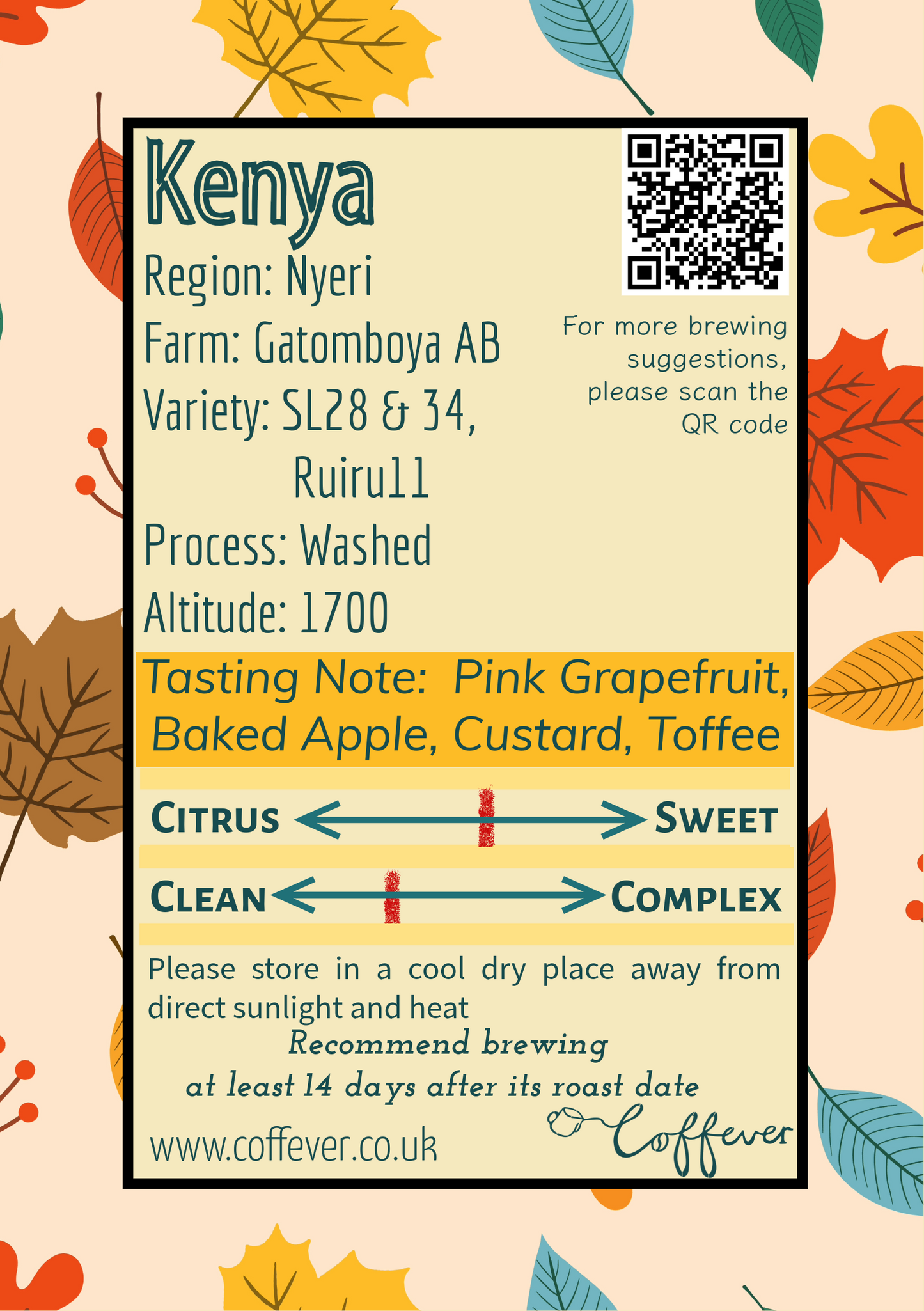
Kenya Gatomboya AB
Kenya Gatomboya AB
Couldn't load pickup availability
What you will expect from the cup...
Pink Grapefruit, Baked Apple, Custard, Toffee
Some Information...
Farm: Gatomboya
Region : Nyeri
Altitude: 1700
Process: Washed
Varietal: SL28 & 34, Ruiru11
About the process...
Once pulped, cherries are delivered to fermentation tanks where it will ferment for about 16-20 hours depending on the ambient temperature at that time. The coffee is then fully washed to remove traces of all mucilage in gradient water channels.
The parchment will then be distributed on the raised drying sunbeds where it will dry slowly over the course of around 12-20 days. The parchment is covered during the hottest time using shade nets.
The Coop utilises the lower grades of coffee by roasting and grinding them to promote coffee drinking culture within their farmers under a local brand name Barichu Coffee House. This generates more income and helps to connect the farmers with the product they spend all year tending to.
The coffee is composed of a blend of well-known Kenyan varieties, including SL28, SL34, Ruiru 11,
SL28, originally selected in the 1930s, is especially valued for its drought tolerance and complex, sweet profile with wine-like undertones. SL34, another historic selection, is admired for its rich body and balanced acidity, though it requires careful management due to its susceptibility to disease.
Ruiru 11 offers high yields and strong disease resistance.
About the farm...
Earning it's name from the local village, the Gatomboya Coffee Washing Station was formed by the cooperative that still owns and supplies the coffee. Processing at Gatomboya wet mill adheres to stringent quality-driven method. After the red ripe cherry is delivered to the processing area, it undergoes meticulous sorting to ensure exceptional cup quality of their coffee. Most farmers farm a plot approximately one hectare, with roughly 400 coffee bushes planted on it, amongst food and other cash crops.
The Chacón farms are mostly run according to organic farming principles. Over time, it has become more costly and complicated to maintain official organic certification, and the family felt the certification no longer added sufficient value to their product. They have since allowed it to lapse, but organic principles remain central to their philosophy. Their production is chemical-free, pulp from the mill is composted and returned to the coffee plants, and their processes use only one cubic meter of water per day.
Share